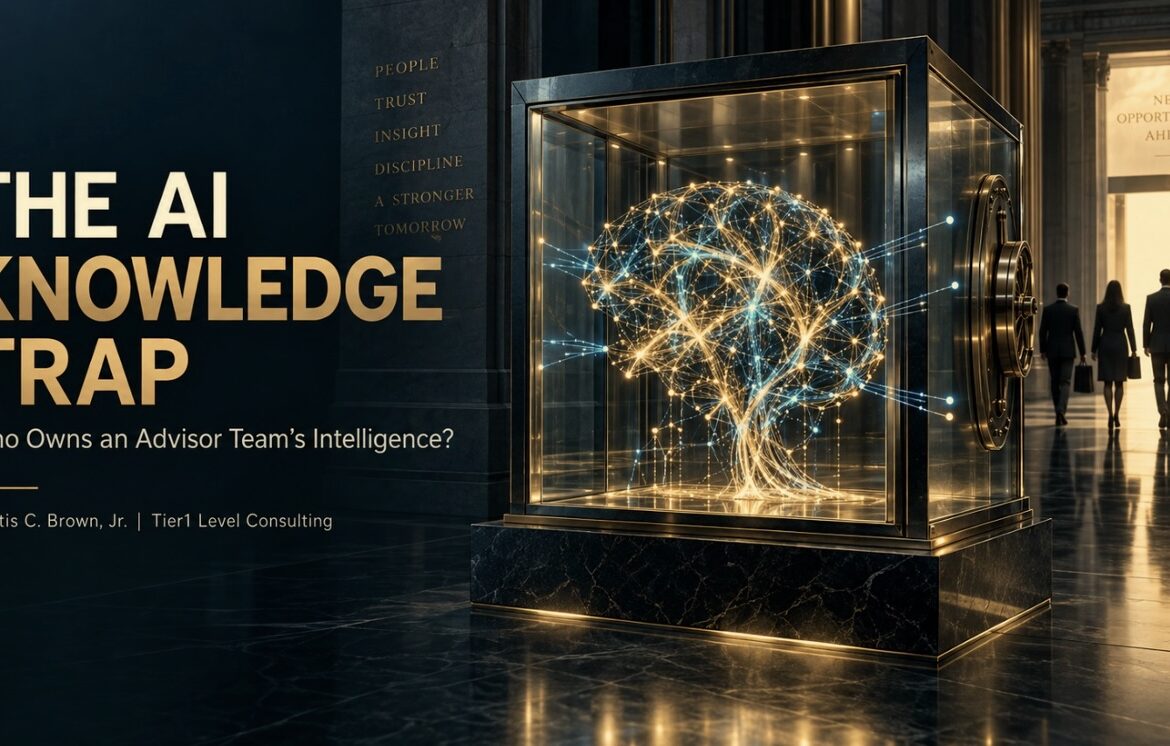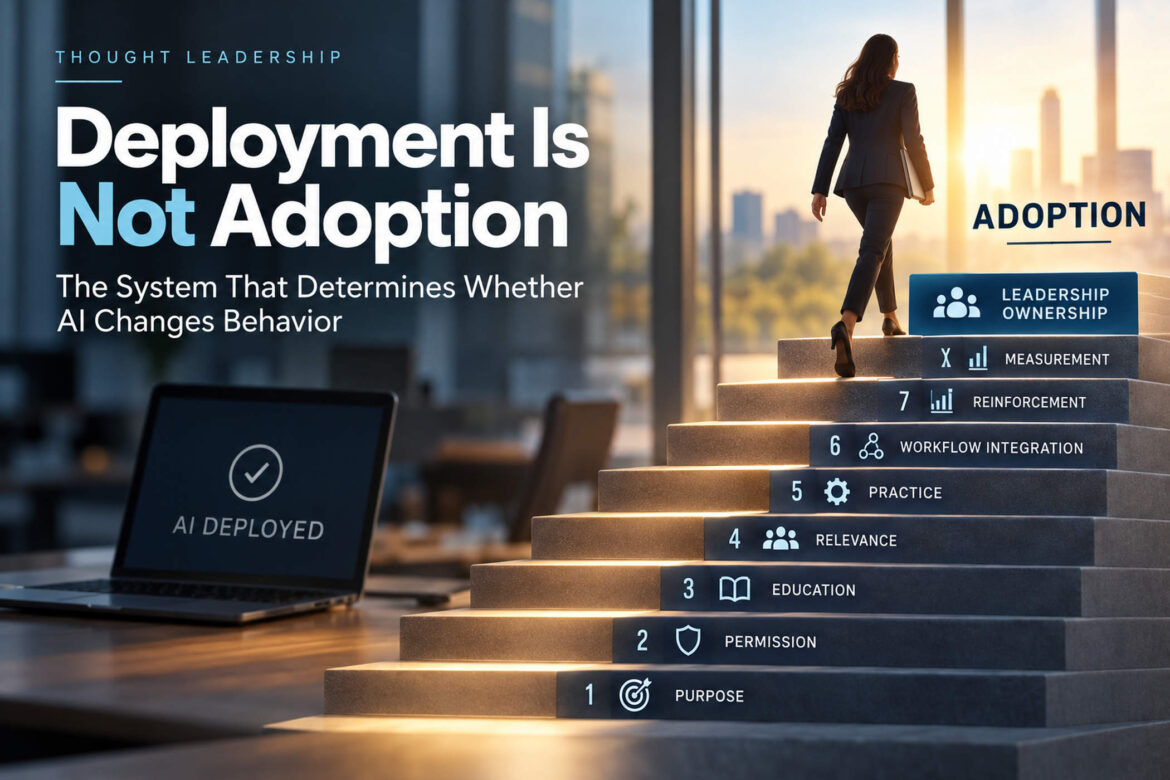

Why the Next Advantage in Wealth Management Won’t Be Information
By Curtis C. Brown, Jr., Founder & CEO, Tier1 Level Consulting
I started in this business in 1978. If you want to understand where wealth management is headed over the next decade, it helps to understand where it started.
There was no internet that year. No Bloomberg terminal on every desk. If a client wanted to know what was happening with a stock, they found out from the ticker, from research that came out of the home office, or from an advisor who happened to know something they did not. Information was not just valuable. It was scarce, and in this business, scarcity is where the money has always lived.
Here is what that meant in practice. If you had the research, you had the client. If you had access to the offering, you had the client. If you knew something the person across the desk from you did not know, and you could explain it clearly, you were valuable almost by default. Products and research were king. Not the advisor. The advisor was simply the person standing next to the information.
That world is gone. A client can open an app during a meeting today and pull up more research than an entire back office could have produced in 1978, in seconds, for free. So the question every firm in this industry should be asking itself is not how do we add more AI tools. It is this: if information is no longer scarce, what exactly are we selling?
I believe I know the answer, and I believe it points to a pattern I have now watched play out more than once across a forty plus year career. Something that used to be scarce becomes abundant. The value does not disappear when that happens. It migrates, to whatever is now genuinely hard to find. Here are the five places I see it migrating right now.
From Information to Judgment
The first migration is from information to judgment. A client can already get the analysis from an AI system before your meeting even starts. What they cannot get from a machine is help deciding what to do with it, or someone who notices that the real question behind their question is not about numbers at all. Information becomes intelligence. Intelligence, handled well, becomes judgment. Judgment, over enough years and enough hard conversations, becomes something rarer still. It becomes wisdom. Machines will always move faster through the first two stages than we can. Our job is to own the last two.
From Headcount to Orchestration
For most of this industry’s history, growth meant hiring. More clients required more people, and more people required more management layers. That assumption is breaking. Scale no longer requires more people. It requires better orchestration between human judgment and digital capability. The advisor with the biggest team is no longer automatically the advisor with the biggest advantage. The advantage belongs to whoever can best combine people and intelligent systems, and firms that automate the work junior advisors used to learn from without deliberately rebuilding that development path are setting up a talent crisis for themselves several years out.
From Segmentation to Context
For decades, personalization in this industry really meant segmentation with better branding. Clients were sorted into buckets by age and asset level, and it felt personal, but it was closer to a well designed form letter. Real personalization looks different, and AI now makes it possible at scale. It means knowing that a client is not just a number in a risk tolerance bucket. She is selling the business that defined her for thirty years, or navigating a second marriage with estate planning complications the first marriage never had, or quietly worried about one child’s judgment with money. Every firm can now claim to offer personalized service. That claim is about to become meaningless, because saying it will not differentiate anyone. What will differentiate a firm is whether the client actually experiences being known.
From Inherited Assets to Earned Trust
The industry talks about the coming wealth transfer in terms of dollars. I think the more useful frame is relationships, not dollars. Wealth moves legally through an estate document, but control and decision authority move through relationships, and there is no guarantee an advisor moves with them. The next generation is quietly asking a dangerous question: why should I keep my parents’ advisor? That question cannot be answered with tenure or a well drafted trust. Trust has to be earned again, by a new person, often starting close to zero. I have watched advisors lose entire family relationships not because they did anything wrong, but because they spent decades building trust with one generation and never built a real relationship with the one coming up behind it.
From Access to Complexity Navigation
Sophisticated tools and strategies used to be reserved for a small number of very wealthy households, because access itself was the scarce resource. That wall is coming down fast, and on the surface, that is good news. But more access creates more choice, and more choice creates more complexity, and more complexity creates more ways to make an expensive, well intentioned mistake. The advisor of the future does not create value simply by opening a door that used to be locked. Soon, everyone will have a key. The advisor creates value by knowing which doors should stay closed, and how a clever strategy actually interacts with a client’s whole financial life, not just the one problem it was pitched to solve.
Five Roles for What Comes Next
Put those five migrations together and a clear picture emerges of what the advisor of the future actually does. Not a competitor to AI, and not someone who ignores it, but an orchestrator of it, working in the space between the human being and the machine.
The advisor becomes a judgment provider, helping clients decide what matters and what can be trusted when information itself is no longer the scarce resource. A context architect, grounding every recommendation in a specific family’s history rather than a generic bucket. A trust builder, creating relationships durable enough to survive a market cycle, a generational handoff, and a hundred competitors with access to the same tools. And a complexity navigator, helping clients use sophistication without quietly drowning in it.
Where This Leaves Us
I did not build a career by being the smartest person in the room in 1978, or in any room since. I built it by paying attention to where the ground was shifting a little earlier than the person next to me, and by being willing to change what I was doing about it.
That is the real work in front of this industry now. Value has migrated before. It is migrating again, right now, while most firms are still debating which AI tool to buy next quarter. The scaffolding this industry was built on, scarce information and scarce access, is coming down. What that scaffolding was built to protect, one person helping another person make the hardest financial decisions of their life, is not going anywhere. If anything, it is about to matter more than it has in decades, because it will finally be the only part of the job a machine cannot do.
The only real question left is whether you know where the value is going, and whether you are prepared to be standing there when it arrives. At Tier1, this is the work we build our coaching, our frameworks, and our AI governance curriculum around every day, helping advisors and firm leaders find their footing on the other side of that migration before it finishes happening without them.